
November 6, 2025
Australia vs India 5th T20I 2025 Preview: Final Showdown in Brisbane
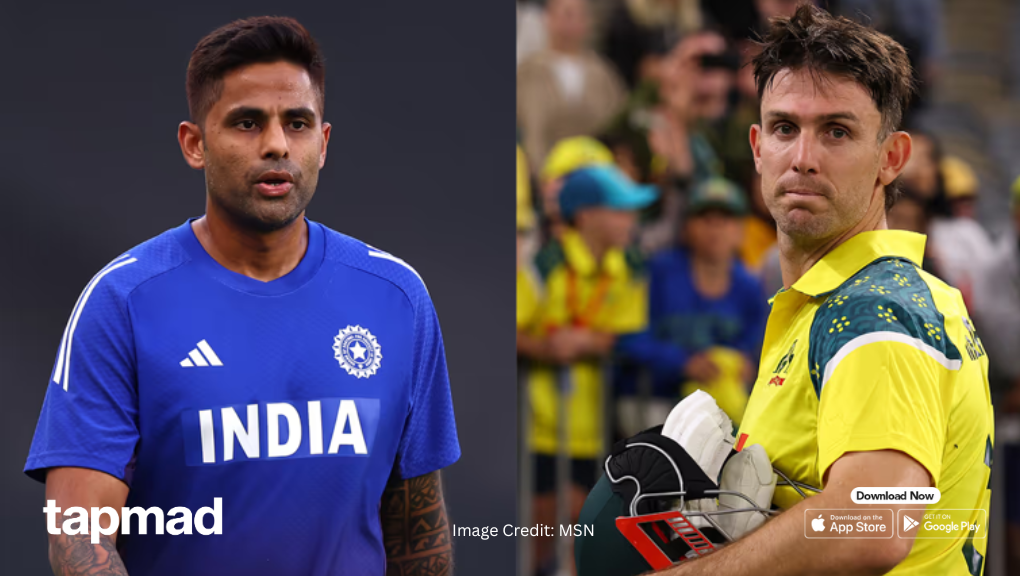

There’s something special about a deciding match. The noise, the nerves, the weight of every mistake. As India and Australia head into the 5th T20I at Brisbane, everything they’ve built over two weeks narrows down to one night. India leads the series 2–1 after four matches, one washed out, and the mood inside both camps is electric. For India, this is about sealing dominance. For Australia, it’s about pride, balance, and a bit of redemption in front of home fans.
The Gabba under lights has its own pulse. The bounce, the carry, the echo when the ball thuds into the gloves, every delivery feels alive. And when a series is on the line, that energy multiplies.
The Decider Everyone Waited For
India’s rise in this series hasn’t been accidental. It’s been a story of planning and courage. They’ve rotated smartly, backed young players, and handled pressure moments better. The 48-run win in Carrara wasn’t just a victory; it was a statement. Bowlers hunted in pairs, fielders cut singles, and batters played without fear.
Australia, on the other hand, looks like a team still searching for rhythm. Two losses in three completed matches isn’t their usual script. But they know how to bounce back. Brisbane gives them a surface and atmosphere they understand. It’s quick, it rewards intent, and it punishes hesitation.
This match carries emotional weight, too. For Mitchell Marsh, it’s a chance to lead from the front after a few quiet outings. For Suryakumar Yadav, it’s another opportunity to finish what has been an impressive overseas series as captain. The narrative is rich, contrasting leadership styles, fresh faces on both sides, and a battle for momentum heading into the T20 calendar’s final stretch of the year.
India’s Momentum and the Power of Composure
India’s campaign has been defined by calm. Not flashy, not chaotic, calm. Whether it was chasing under pressure in the third T20I or defending modest totals in the fourth, the team has looked in control.
Abhishek Sharma has been the spark. His recent numbers, 424 runs in 10 matches at a strike rate of 185, tell only half the story. It’s the way he starts, unbothered by the stage, untouched by nerves, that changes the tone of every innings. Tilak Varma and Rinku Singh have played their parts too, often steadying innings after brisk starts.
Then there’s the bowling unit. Varun Chakravarthy has quietly become India’s X-factor. Eleven wickets in eight games at an economy under seven, that’s rare control for a spinner in T20 cricket. Bumrah’s return to rhythm has been another plus. The sight of him sprinting in under the lights, hitting that same off-stump corridor, is reassuring for any Indian fan.
What’s impressed most is how they’ve handled transitions. New players, new combinations, same belief. That consistency has been India’s edge.
Australia’s Fight for Balance
Australia is wounded but dangerous. Their batting has firepower; Marsh, Maxwell, Tim David, Matthew Short, all capable of flipping games. The issue has been sequencing. When Marsh fires, Australia flies. When he doesn’t, the middle overs lose tempo.
Mitchell Marsh’s numbers, 373 runs in his last 10 matches at a strike rate of 166, prove how much he shapes their innings. The home crowd expects a statement innings from him. Tim David, too, remains a key. His ability to clear boundaries late gives Australia a punch most sides envy.
Glenn Maxwell’s form remains the wild card. When he clicks, chaos follows. When he doesn’t, the lineup feels heavy. And against India’s variety, his role will be decisive.
Bowling-wise, Nathan Ellis has been outstanding, 12 wickets in just six games, attacking the stumps relentlessly. Zampa, though expensive at times, brings control through phases. Yet, Australia’s biggest challenge has been in the first six overs. They’ve struggled to contain India’s openers and haven’t struck early enough to tilt the momentum.
In Brisbane, they’ll want to change that. The Gabba surface offers bounce for quicks, and that’s where Ellis and Bartlett will be key. If they can find early wickets, Australia’s spinners can dictate the middle overs.
Conditions and Tactical Insights
Brisbane rarely hides its character. It’s quick, true, and favors stroke-makers early. Seamers get bounce, but batters enjoy the pace on offer. Under lights, the swing can last three overs if the weather stays mild. With no forecast of rain, fans can expect a full, uninterrupted contest.
India might stick with a similar XI, banking on the balance that’s worked, Bumrah leading the attack, Varun as mystery spin, and Axar Patel’s all-round steadiness. Washington Sundar could slot in if the surface looks dry.
Australia could tweak its combination slightly. Ben Dwarshuis or Mahli Beardman might come in for a bit more pace, while Zampa remains a lock. Marsh’s decision at the toss will matter; chasing under lights at Brisbane can be tricky, but scoreboard pressure has also hurt Australia lately.
Expect India to use their powerplay aggression again. Abhishek and Gill have been fearless against pace, and that first phase might decide everything. If India crosses 50 without loss, they tend to dominate the middle overs with freedom.
Key Battles to Watch
Marsh vs Bumrah
Two leaders, two mindsets. Marsh loves pace, Bumrah thrives on precision. Their duels at the start could set the mood. A couple of early dots, and pressure builds. One mistimed hit, and the Gabba roars.
Abhishek Sharma vs Nathan Ellis
Abhishek’s aggression against the new ball has been game-changing, but Ellis’s stump-targeting lengths could test him. Ellis doesn’t bowl wide; he attacks. This contest could define the tone of India’s innings.
Maxwell vs Varun Chakravarthy
The unpredictability battle. Maxwell’s range versus Varun’s deception. Both fearless, both inconsistent, and when they meet, something usually breaks open. Either Maxwell finds rhythm, or Varun finds a wicket.
Middle-order calm
Tilak Varma and Rinku Singh against Zampa’s control. That’s where India has built its composure, rotating strike, waiting for the bad ball. If Australia can squeeze this phase, the match opens up again.
Recent Form
Let’s put the numbers in context.
- India: W, NR, L, W, W.
- Australia: NR, W, NR, W, L, L.
India’s rhythm clearly stands out. They’ve won three of their last four completed T20Is, all with different heroes. That’s a healthy sign.
In Carrara, India defended 167 with confidence. Every over had intent, every fielder looked tuned. The 48-run margin said as much about India’s control as Australia’s collapse.
Australia’s batting that night never settled. From 50 for 2 to 119 all out, they looked a touch rushed. But that’s not the Australia most expects. Brisbane could bring out a different version, aggressive, emotional, and eager to level.
Leadership and Body Language
This series has quietly become a leadership test. Mitchell Marsh is direct. He backs instincts, attacks early, and trusts his hitters. Suryakumar Yadav, by contrast, brings calm energy. Smiles often, speaks lightly, but commands respect through performance.
Both captains know what’s at stake. For Marsh, a home loss would sting. For Suryakumar, a series win in Australia would elevate his growing reputation as a confident, composed leader.
Squads
Australia: Mitchell Marsh (c), Josh Inglis (wk), Matthew Short, Glenn Maxwell, Tim David, Marcus Stoinis, Nathan Ellis, Adam Zampa, Xavier Bartlett, Ben Dwarshuis, Matthew Kuhnemann.
India: Suryakumar Yadav (c), Shubman Gill (vc), Abhishek Sharma, Tilak Varma, Rinku Singh, Sanju Samson (wk), Shivam Dube, Axar Patel, Jasprit Bumrah, Varun Chakravarthy, Arshdeep Singh.
Conclusion
This series has already given fans variety, a washout, a chase, a collapse, and a commanding defense. All signs point to a dramatic finish. Australia will throw everything. Marsh knows nothing less than a win can restore their rhythm. Expect intensity from ball one.
But India looked more settled. Every role defined, every player confident. Their biggest strength has been adaptability, changing gears without panic. If the Gabba pitch stays true, expect runs. A total of around 180 could be the benchmark. In chases, the team batting second has often struggled with grip under lights. That could influence the toss call.
Still, this isn’t just about numbers or stats. It’s about who handles the moment better. And right now, India looks calmer. The form of Abhishek Sharma and the control of Bumrah and Varun could tilt the finale their way.
But one thing’s certain, Brisbane will get a show. Because when India and Australia play under pressure, something always happens.